


For businesses operating across the UAE, the choice between a mains-fed water cooler and a bottled water cooler carries real consequences — for running costs, hygiene standards, sustainability credentials, and the day-to-day wellbeing of your team. In a region where temperatures regularly exceed 45°C in summer and where the UAE Net Zero 2050 strategy has placed environmental responsibility at the heart of business practice, the decision deserves careful consideration.
This guide breaks down the practical differences between mains-fed and bottled water coolers across the factors that matter most to UAE organisations: total cost of ownership, hygiene, sustainability, and operational convenience. Whether you are based in Dubai, Abu Dhabi, Sharjah, or elsewhere in the Emirates, this comparison will help you make an informed decision about your workplace water dispensing setup.
In This Article
How Each System Works
Mains-Fed Water Coolers
A mains-fed water cooler connects directly to your building’s water supply via a simple plumbing connection. Water passes through a multi-stage filtration system — removing chlorine, sediment, and dissolved impurities — before being chilled, heated, or carbonated on demand. In the UAE, where mains water supplied by DEWA, ADDC, or SEWA is primarily desalinated, a high-quality filtration stage significantly improves the taste and quality of dispensed water, making it genuinely pleasant to drink rather than merely acceptable.
There are no bottles to store, replace, or manage. The unit draws from a continuous mains supply throughout the working day. Modern units can typically be installed up to 13 metres from the nearest pipework, giving most commercial premises considerable flexibility in positioning.
Bottled Water Coolers
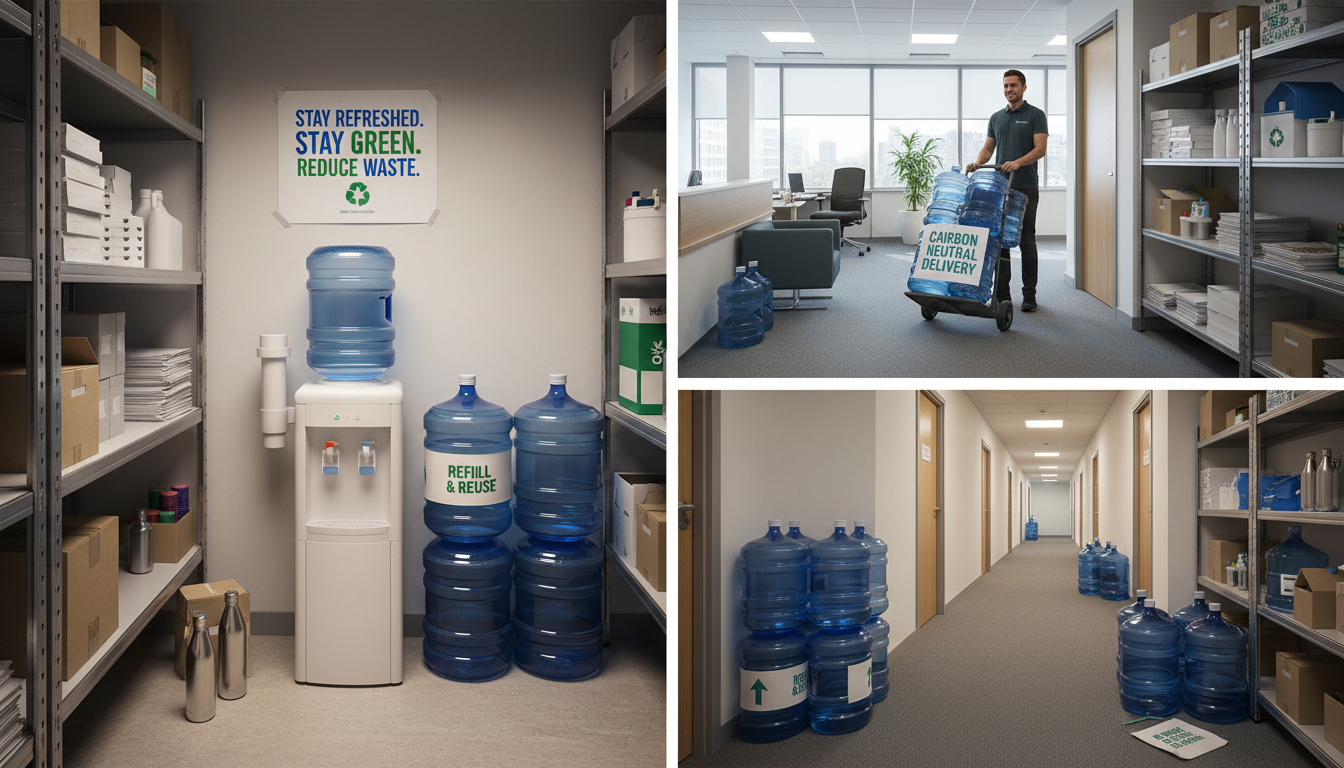
Bottled water coolers use large 19-litre refillable bottles that sit on or inside the unit. When empty, a bottle must be physically replaced, and regular deliveries are required to maintain supply. Brands such as Al Ain, Masafi, and Oasis are widely available across the UAE, but their cost and logistics represent a significant and recurring operational overhead.
Bottled coolers require no plumbing, making them easy to position anywhere with a power socket. This flexibility is their primary advantage — particularly useful for temporary sites, outdoor areas, or locations where connecting to a mains supply would be impractical or expensive.
Cost Comparison: Total Cost of Ownership
The upfront cost of a mains-fed cooler is higher than a bottled unit, as installation involves connecting to the water supply and fitting a filtration system. However, ongoing running costs tell a very different story — and in the UAE, where bottled water brands carry a premium and summer consumption is exceptionally high, the cost difference compounds quickly.
With a bottled cooler, UAE businesses face recurring charges for water purchases, bottle rental, delivery scheduling, and storage. A medium-sized Dubai or Abu Dhabi office consuming 600 to 800 litres per week during peak summer months will accumulate substantial costs over a three-year period. When you factor in the logistics of scheduling deliveries, receiving stock, and managing storage space, the true cost of a bottled system is consistently underestimated.
Mains-fed running costs are limited to the DEWA or local authority water tariff (a fraction of bottled water pricing), periodic filter replacements, and scheduled servicing. There are no delivery charges, no bottle deposits, and no minimum order requirements. For UAE offices with consistent daily usage, the financial case is compelling: higher initial investment, substantially lower total cost of ownership.
Most UAE businesses recover the additional upfront cost of a mains-fed system within 12 to 18 months through reduced running costs — with ongoing savings throughout the lifetime of the unit.
Hygiene: Which System Is Cleaner?
In the UAE’s hot climate, hygiene standards for drinking water are critical. High ambient temperatures accelerate bacterial growth, and water that is poorly handled or stored can become a genuine health concern. This is an area where mains-fed and bottled systems differ significantly.
Mains-fed coolers filter water at the point of use, passing it through activated carbon and sediment filters immediately before dispensing. Many units also incorporate UV disinfection, which eliminates up to 99% of bacteria without the use of chemicals. The water travels a short, controlled distance from filter to tap, minimising contamination risk at every stage.
Bottled coolers introduce multiple points of contamination. Every bottle change exposes the cooler’s receiving mechanism to the environment. Bottles are handled during filling, transportation, and warehouse storage — sometimes in high-temperature conditions before reaching your premises. If bottles are stored in direct sunlight or warm storage rooms, bacterial growth can occur before the water is even used. The cooler’s internal reservoir also requires regular sanitisation to prevent biofilm accumulation.
For businesses operating in sectors with regulatory hygiene requirements — hospitality, healthcare, food service, or any HACCP-governed environment — mains-fed systems offer a measurably more controlled and auditable solution. Combined with touchless dispensing, which is now standard on many modern units, they minimise contact points and cross-contamination risk throughout the day.
Environmental Impact and UAE Net Zero 2050
The UAE’s Net Zero 2050 strategy — reinforced by the country’s COP28 presidency and its National Climate Change Plan — requires businesses across all sectors to actively reduce their environmental footprint. For facilities and operations teams, workplace hydration is one of the most straightforward areas to act on immediately.
According to BRITA, mains-fed water dispensers reduce carbon footprint by 86% compared to bottled water dispensers. This accounts for the elimination of bottle manufacturing, distribution logistics, and plastic waste disposal — all of which carry a significant environmental cost in the UAE’s import-dependent supply chains.
“Mains-fed water dispensers reduce carbon footprint by 86% compared to bottled water dispensers, accounting for bottle manufacturing, transportation, and disposal.” — BRITA Professional
For organisations pursuing LEED certification, reporting on ESG performance, or aligning with the UAE’s Green Economy for Sustainable Development initiative, switching from bottled to mains-fed is one of the most immediate and measurable sustainability improvements available. It eliminates plastic bottle waste at source, removes delivery vehicle emissions from your Scope 3 footprint, and reduces the water wastage embedded in bottle production.
Convenience and Reliability
From an operational perspective, mains-fed coolers require considerably less day-to-day management. There are no deliveries to coordinate, no bottles to store in valuable office space, and no risk of running short between delivery cycles. Supply is continuous and automatic — whether it is a standard Tuesday afternoon or the peak of August when consumption surges.
Bottled coolers require ongoing management: stock monitoring, delivery scheduling, receipt and storage of heavy bottles, and physically changing units when they run out. The bottles themselves weigh approximately 19 kilograms when full. In larger offices, managing a bottled water operation can represent a meaningful administrative and physical burden.
The one area where bottled coolers retain an advantage is placement flexibility. With no plumbing required, they can go anywhere with a power socket — ideal for temporary sites, outdoor hospitality areas, construction zones, or remote locations where connecting to a mains supply would be disproportionately expensive.
Which System Suits Your Business?
For permanent commercial premises across the UAE — corporate offices, hotels, healthcare facilities, retail environments, or educational institutions with consistent daily usage — mains-fed water coolers are the stronger choice across virtually every metric. They cost less over time, deliver superior hygiene outcomes, support UAE Net Zero 2050 commitments, and demand far less operational management.
Bottled coolers remain a practical option for temporary premises, low-usage locations, or sites where plumbing access is genuinely impractical. They also suit businesses needing water provision at multiple dispersed points across a large site where running pipework to each location would be prohibitively costly.
Many UAE organisations operate a pragmatic combination: mains-fed units in primary office, kitchen, and break areas, with bottled coolers serving remote or temporary locations. This approach captures the cost and hygiene advantages of mains-fed where consumption is highest, while maintaining flexibility where it is genuinely needed.
Making the Switch
If your organisation currently relies on bottled water coolers and is considering a move to mains-fed, the process is more straightforward than most businesses expect. A professional site survey identifies the optimal position for the unit relative to the nearest mains connection, and installation is typically completed in a single visit with minimal disruption.
Specification matters. The right unit for a 20-person Abu Dhabi office is different from what a 200-person Dubai business hub requires. Office size, headcount, peak usage periods — particularly the UAE summer months — and the dispensing options your team needs (chilled, ambient, boiling, sparkling) all inform the recommendation. A supplier with experience in the UAE market will ensure you get a system built for local conditions, not an off-the-shelf solution designed for temperate climates.
Frequently Asked Questions
Is mains water in the UAE safe to drink through a filtered cooler?
Yes. DEWA and other UAE water authorities supply water that meets regulatory safety standards. A mains-fed cooler’s multi-stage filtration system removes residual chlorine, sediment, and the mineral taste associated with desalinated water, delivering clean, refreshing water. Many units also include UV disinfection. The result is genuinely good-tasting water without the cost and inconvenience of bottled supply.
How much does a mains-fed water cooler cost compared to bottled in the UAE?
Upfront costs are higher for mains-fed installation. However, ongoing running costs are significantly lower — no bottle purchases, no delivery fees, and no storage overhead. Most UAE businesses recover the investment within 12 to 18 months, with ongoing savings that are particularly pronounced during the high-consumption summer months.
Can a mains-fed cooler be installed in any UAE office building?
In the vast majority of commercial premises, yes. Modern units can connect to a supply up to 13 metres away, and a professional site survey will confirm feasibility. Most permanent commercial buildings in Dubai, Abu Dhabi, Sharjah, and across the Emirates have accessible plumbing infrastructure suitable for installation.
How often does a mains-fed cooler need servicing in the UAE?
Given the mineral content of desalinated mains water in the UAE, filter replacement every four to six months is generally recommended. Regular professional servicing ensures hygiene standards are consistently maintained and that the system performs reliably throughout the year, including during peak summer demand.
How does switching to mains-fed support UAE Net Zero 2050 targets?
Switching to mains-fed eliminates plastic bottle waste, removes delivery vehicle emissions from your carbon footprint, and reduces the water and energy consumed in bottle production. These are directly measurable environmental improvements that support UAE Net Zero 2050 commitments and contribute to LEED or ESG reporting where applicable.
Ready to Make the Switch?
Sovereign Water supplies and maintains mains-fed and bottled water cooler systems for commercial premises across the UAE. Our team can assess your current setup, recommend the right solution for your requirements, and handle the full installation and ongoing servicing.

