


A water softener commercial building UAE teams can rely on is one of the most effective ways to protect HVAC systems, boilers, and plumbing from the progressive damage that hard water scale causes. Sovereign Water has been supplying, installing and maintaining commercial water treatment systems across the UAE and the wider GCC region for years, giving us direct experience of the water quality challenges that building operators in Dubai, Abu Dhabi, Sharjah and across the Emirates encounter. Hard water is a persistent and frequently underestimated threat to commercial building infrastructure in the UAE, and this article explains exactly how addressing it delivers a measurable return on investment.
Water hardness across the UAE varies by source and emirate. While much of the municipal supply managed by the Dubai Electricity and Water Authority (DEWA) and Abu Dhabi Distribution Company (ADDC) draws heavily on desalination, blended supplies and groundwater-fed developments can present hardness levels of 120 to 300 milligrams per litre (mg/l) as calcium carbonate (CaCO₃) or above. That mineral load accumulates inside boilers, Heating, Ventilation and Air Conditioning (HVAC) pipework, heat exchangers, and plumbing systems, driving up energy costs and accelerating equipment failure in buildings that have not addressed it. If you manage a commercial property in the UAE and have not reviewed your water treatment strategy, the commercial water treatment solutions available today are more effective and easier to maintain than ever before.
TL;DR
- Water hardness in the UAE, including blended and groundwater-fed supplies, is sufficient to cause significant scale accumulation in commercial building plant without treatment.
- Hard water scale in HVAC systems and boilers raises energy consumption, shortens equipment life, and drives unplanned maintenance costs.
- Even a modest improvement in cooling and boiler efficiency through scale elimination can deliver payback in months, not years.
- Professional sizing, standards-compliant installation, and ongoing maintenance are essential to get the full benefit from any commercial system.
- Sovereign Water provides free site assessments across the UAE to help building operators build a total cost of ownership (TCO) case before committing to a solution.
In This Article
- What Is a Commercial Water Softener and How Does It Work?
- How Hard Water Damages HVAC Systems
- Scale Buildup in Commercial Boilers: The Hidden Cost
- Protecting Plumbing, Pipework and Valves
- Total Cost of Ownership: Is a Commercial Water Softener Worth It?
- Choosing the Right System for Your Commercial Building
- Professional Installation and Ongoing Maintenance
- Frequently Asked Questions
What Is a Commercial Water Softener and How Does It Work?
A commercial water softener removes hardness minerals, principally calcium and magnesium, from the mains supply through a process called ion exchange. Hard water passes through a resin bed charged with sodium ions; the resin captures the calcium and magnesium ions and releases sodium in their place, producing softened water that cannot form limescale. When the resin becomes saturated, it regenerates automatically using a brine solution, restoring its capacity and continuing the cycle.
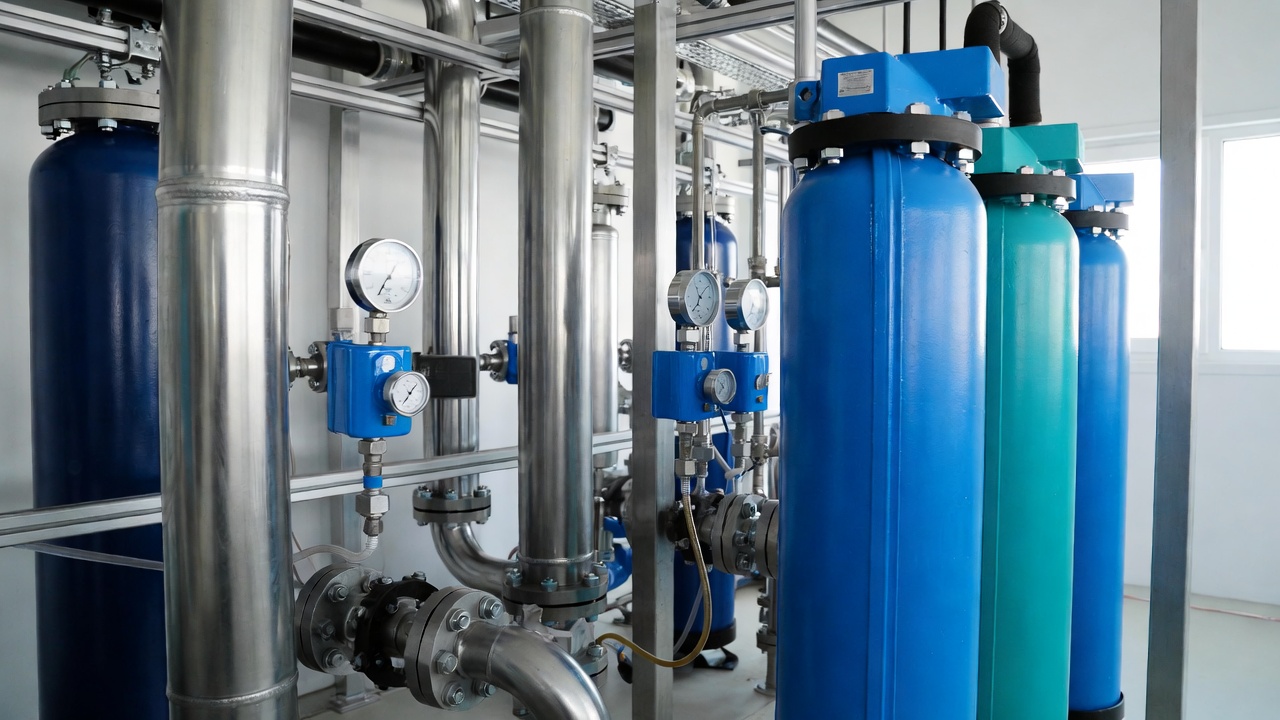
Commercial water softeners differ from domestic models in several important respects. They are engineered for higher flow rates, continuous demand, and more frequent regeneration cycles, making them fit-for-purpose for high-rise commercial towers, hotels, hospitals, data centres, and large mixed-use developments across Dubai, Abu Dhabi, and the wider UAE. Rather than a single small cabinet unit, a commercial softener typically uses a duplex or twin-tank configuration so that one vessel is always in service while the other regenerates, guaranteeing an uninterrupted supply of softened water around the clock.
Modern systems use metered regeneration, which triggers based on actual water consumption rather than a fixed time schedule. This approach optimises both salt and water efficiency, reducing running costs and supporting sustainability targets that are increasingly embedded in UAE building management standards. The result is a reliable, low-intervention solution that integrates neatly with the building’s main supply at the point of entry, protecting every downstream application from a single installation point.
How Hard Water Damages HVAC Systems
Hard water causes accelerated deterioration in HVAC systems by depositing limescale on heat transfer surfaces, restricting water flow, and increasing the energy required to achieve the same thermal output. In the UAE, where commercial cooling systems operate at near-maximum capacity for eight to ten months of the year, scale-related efficiency loss translates directly into significantly elevated electricity consumption and reduced equipment lifespan.
Cooling towers are particularly vulnerable in the UAE’s hot, humid climate. They operate as open systems, meaning water evaporates continuously and dissolved mineral concentrations rise over time. High ambient temperatures accelerate evaporation and scale deposition, blocking distribution nozzles, coating fill media, and corroding structural components. Closed-loop chilled water circuits face a different but equally damaging problem: the same volume of water circulates indefinitely, concentrating any residual hardness until scale deposits form on the internal surfaces of pipework, heat exchangers, and fan coil units throughout the building.
“When mineral deposits coat heat transfer surfaces, your equipment works harder and uses more energy to achieve the same results.”
Installing a commercial water softener at the building’s main supply line, combined with appropriate inhibitor dosing for closed circuits, eliminates the root cause of this deterioration. HVAC systems that receive consistently softened make-up water maintain their design efficiency throughout their operational life, which in the UAE context delivers a particularly significant energy cost saving given the high cooling load. For more detail on how Sovereign Water protects commercial HVAC assets across the GCC, visit our Smart Maintenance programme page.
Scale Buildup in Commercial Boilers: The Hidden Cost
Scale inside a commercial boiler is one of the most expensive consequences of untreated hard water. As water is heated, calcium carbonate precipitates out of solution and adheres to the boiler’s heat exchanger surfaces, creating an insulating layer that forces the burner to run longer and hotter to achieve the required flow temperature. Industry data from Kinetico Advanced Water Systems indicates that proper water softening and condensate treatment can save tens to hundreds of thousands of dollars in annual energy costs for large boiler installations, in addition to significantly extending equipment service life.
The financial impact operates on two levels. First, fuel consumption rises in direct proportion to scale thickness because scale conducts heat approximately 30 times less efficiently than clean steel. Second, the mechanical stress imposed by localised overheating causes premature failure of boiler components, from heat exchanger tubes to combustion chamber linings, triggering expensive unplanned repair bills and potentially requiring full boiler replacement years ahead of the expected lifecycle.
Feed water quality standards for boilers in the UAE align with international guidance from the British Standards Institution (BSI) and Gulf Standards Organisation (GSO), which set recommended hardness and dissolved oxygen limits for boiler feed water. Softening the make-up water to below 5 mg/l hardness as CaCO₃ before it enters the boiler circuit is standard practice in any professionally specified system. For steam-raising boilers in hotels, hospitals, or the many large mixed-use developments across the Emirates, this single measure can deliver a measurable return on investment within the first year of operation.
Protecting Plumbing, Pipework and Valves
Commercial buildings contain extensive runs of pipework, dozens of control valves, and numerous terminal fittings, all of which are subject to progressive deterioration when hard water flows through them unchecked. Limescale constricts bore diameters over time, reducing flow rates, increasing pump pressure requirements, and creating conditions that accelerate corrosion at the point where scale deposits meet bare metal.
In the UAE’s fast-paced construction environment, commercial towers and mixed-use developments are frequently handed over and occupied on tight timelines. Water treatment is sometimes addressed reactively once scale-related problems are already visible. The consequences are predictable: premature valve and cartridge failures, degraded heat exchanger performance, and rising pump energy consumption within the first few years of building life. Water softening installed from commissioning protects the entire distribution system from day one.
Hot water storage systems in UAE commercial buildings require particular attention. Scale-free cylinders maintain their thermal efficiency, reducing the energy required to store water at temperatures sufficient to manage Legionella risks in line with World Health Organisation (WHO) guidance, and extend the interval between mandatory inspections and cleaning cycles required under Dubai Municipality and Abu Dhabi Public Health Centre standards. Protecting these assets through water softening is a straightforward contribution to building performance and regulatory compliance.
Total Cost of Ownership: Is a Commercial Water Softener Worth It?
The total cost of ownership (TCO) of a commercial water softener almost always compares favourably with the cost of doing nothing, once the true financial impact of hard water is properly accounted for. A TCO analysis should include the capital cost of the softener, installation, ongoing salt and consumables, and scheduled service, set against the savings delivered through reduced energy consumption, extended equipment lifespan, lower maintenance call-out frequency, and reduced chemical dosing across other water treatment programmes.
For a commercial building in Dubai or Abu Dhabi, the combination of hard or moderately hard supply water and high cooling demand means that scale accumulation in untreated HVAC plant progresses faster than in cooler climates. Payback periods on water softening investments in UAE commercial applications are typically short, because the energy savings and equipment protection benefits accumulate rapidly under continuous operational loads.
“For facilities utilising boilers, proper water softening can extend equipment life by decades, and save tens to hundreds of thousands of dollars in annual energy and water costs by ensuring the most efficient operation possible.”
Beyond the engineering assets themselves, softer water reduces the consumption of cleaning chemicals and detergents across the building, benefits that accumulate quickly in hotel laundries, hospital catering facilities, and the commercial kitchens that serve the UAE’s thriving food and beverage sector. Sovereign Water provides free water quality assessments to help UAE building operators develop a detailed TCO comparison specific to their site, water hardness level, and equipment inventory.
Choosing the Right System for Your Commercial Building
Selecting the right commercial water softener for a building in the UAE requires a proper assessment of three key variables: peak flow rate demand, incoming water hardness, and operational continuity requirements. Undersizing a softener leads to hardness breakthrough during peak demand periods, which undermines the protection the system is installed to provide. Oversizing increases capital cost without delivering additional benefit. Professional sizing is therefore essential.
Flow rate is calculated from the building’s installed demand, accounting for peak simultaneous use during the most demanding periods, whether that is morning occupancy at a commercial tower, shift changeover at a manufacturing facility, or breakfast service at a hotel. Water hardness must be established through site-specific testing; buildings connected to DEWA’s supply in Dubai may have different hardness characteristics to those drawing on groundwater or alternative sources in other emirates or free zones.
For buildings where continuity of softened water supply is critical, duplex systems with alternating vessels are the standard specification. These units ensure that regeneration of one vessel never interrupts supply, which is particularly important in hotels, hospitals, and data centres where cooling and boiler systems operate continuously. A qualified water treatment specialist will recommend the configuration that genuinely fits the site’s requirements and water quality profile, rather than defaulting to the most expensive option.
Professional Installation and Ongoing Maintenance
Professional installation of a commercial water softener is a practical necessity in any commercial setting. Correct installation requires integration with the building’s mains supply, appropriate bypass valving, brine drainage routing, and electrical connection for the control head. Poorly installed systems can fail to deliver the rated performance, create cross-contamination risks, and fall short of the standards required by UAE regulatory authorities including Dubai Municipality, Abu Dhabi Public Health Centre, and the Emirates Authority for Standardization and Metrology (ESMA).
Systems installed by qualified contractors are specified and commissioned to meet applicable standards, protecting building owners and facilities teams from liability and ensuring performance warranties remain valid. For commercial developments in the UAE’s growing sustainability-focused building sector, including those targeting Estidama Pearl or LEED certification, water efficiency and quality documentation is an increasingly valued component of overall building performance credentials.
Once installed, a commercial softener requires routine servicing: salt replenishment, resin cleaning, brine tank maintenance, and periodic performance verification to confirm that hardness removal remains effective. Sovereign Water’s Smart Maintenance programme provides proactive, scheduled service across the UAE, monitoring system performance and responding quickly when issues arise. This approach maximises uptime and ensures the downstream equipment continues to benefit from consistently softened water throughout its service life. Visit our contact page to discuss a maintenance programme for your site.
Frequently Asked Questions
How hard is the water supply in the UAE?
Water hardness in the UAE varies by emirate and supply source. Municipal supplies from DEWA in Dubai and ADDC in Abu Dhabi draw heavily on desalination but can still present moderate hardness in blended supplies. Groundwater-fed developments may see hardness levels of 200 to 300 mg/l as calcium carbonate (CaCO₃) or above, sufficient to cause progressive scale accumulation in commercial building plant without treatment.
How often does a commercial water softener need to be serviced in the UAE?
A commercial water softener in the UAE should be serviced at least twice per year by a qualified technician. The combination of moderate to high water hardness and continuous operational demand in UAE commercial buildings means regular verification of resin performance, brine system condition, and hardness removal efficiency is essential to maintain system effectiveness.
Can a commercial water softener be installed in an existing building?
Yes. Commercial water softeners are routinely installed as retrofits in existing buildings, typically at the main incoming water supply ahead of the plant room. A qualified installer will assess the available space, pipe sizes, drainage routes, and electrical supply to design a solution that integrates neatly with the existing infrastructure without requiring major building works.
What is the difference between a water softener and a water conditioner for commercial use?
A water softener removes hardness minerals through ion exchange, physically eliminating calcium and magnesium from the water. A water conditioner alters the physical behaviour of minerals to inhibit scale adhesion without removing them. Softeners are the proven standard for protecting boilers, HVAC, and plumbing in commercial buildings where full hardness removal is required.
Does Sovereign Water install and maintain commercial softeners across the UAE?
Yes. Sovereign Water supplies, installs, and maintains commercial water softening systems across the UAE, including Dubai, Abu Dhabi, Sharjah, and the Northern Emirates. Our Smart Maintenance programme provides proactive, scheduled servicing to keep systems performing to specification throughout their operational life.
Ready to Protect Your Building’s Infrastructure in the UAE?
Sovereign Water provides fit-for-purpose commercial water softener systems for buildings across the UAE, with professional installation, commissioning, and ongoing Smart Maintenance support included. Our water treatment specialists will assess your site, your water hardness, and your equipment to recommend the right solution at the right investment level.
