
For an office, hotel, restaurant or venue, moving away from delivered bottles is not simply a change of dispenser. It is a purchasing and operations decision: how much water is needed at busy times, where equipment can sit, which water types people actually need, and how the installation and service plan will work on site.
This guide is designed to help UAE commercial buyers compare a mains-fed, bottle-free drinking-water system with their current bottle process. It does not assume that one format is right for every site. Start with demand, the space and the operating responsibilities, then select the equipment configuration.
1. Plan for peak demand, not just headcount
A site can have a modest employee count yet experience concentrated demand: before meetings, during shift changes, at breakfast, beside a buffet or in a busy staff kitchen. Record where people fill bottles, glasses or jugs; when queues form; and whether the system must fill one vessel at a time or support a higher-flow service point.
Ask suppliers to size a configuration against your use pattern rather than a generic “people on site” number. For example, Sovereign’s UAE page lists BRITA Top Pro options at 50 litres per hour for 10–60 users and 85 litres per hour for 20–100 users; these are product-page ratings, not a substitute for a site-specific demand assessment.[4]
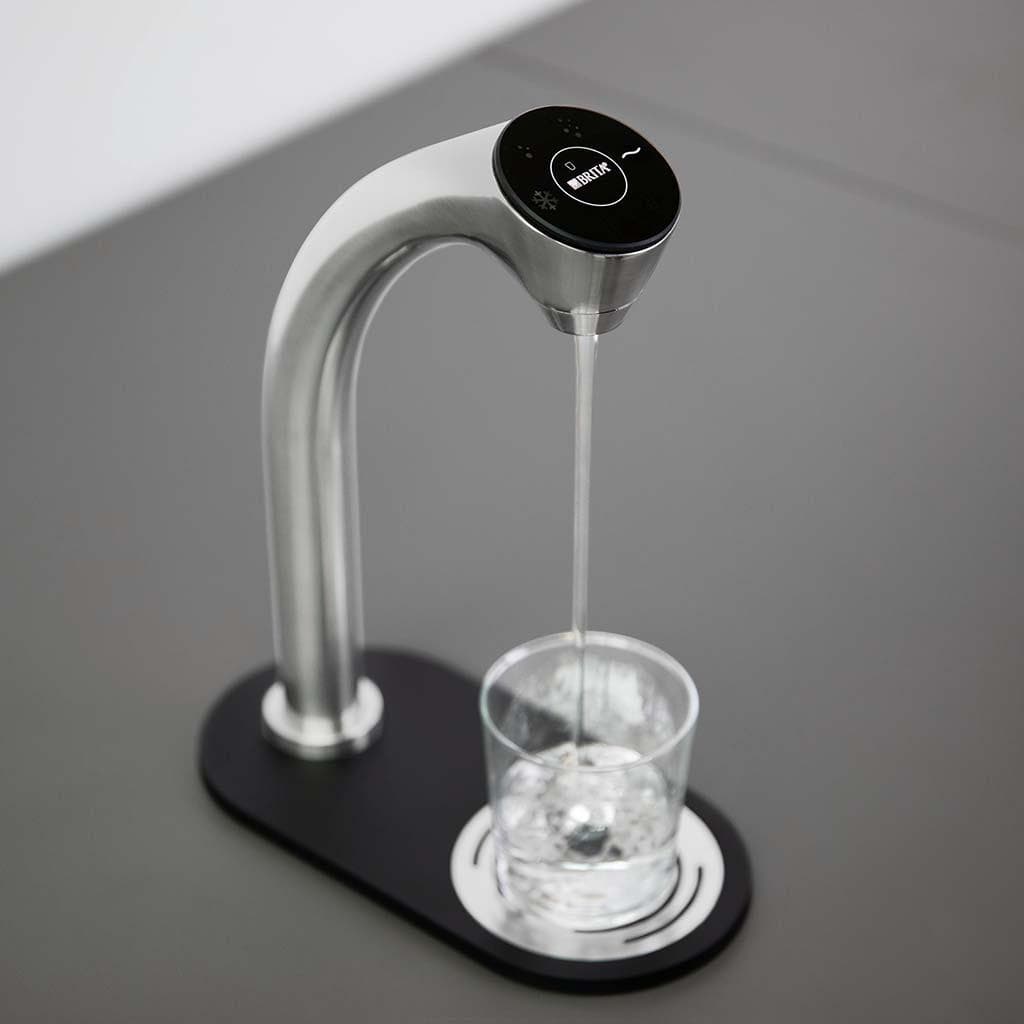
For a workplace or hospitality refreshment point, RoyalFlow Commercial is described as a high-capacity option sized by site survey. For a dispenser format, review BRITA Top Pro alongside the expected peak demand and serving pattern.[3][4]
Buyer check: document peak periods, vessel types, locations, expected simultaneous users and any service requirement for meetings, guest areas or back-of-house.
2. Treat footprint and access as part of the specification
The visible tap or dispenser is only one part of the installation. Before choosing a countertop, floorstanding or under-bench format, map the practical footprint: counter space, cabinet or plant-room space, water and power routes, access for servicing, and how staff and guests move through the area.
A countertop system may suit a tea point with an available worktop; a floorstanding configuration may suit a shared amenity area; an under-bench tap may be appropriate where a clear counter presentation matters. The right choice depends on the site, the specified model and the available services. BRITA lists Top Pro in countertop and floorstanding formats, while the Zip HydroTap G5 Classic Plus is presented with an under-bench command centre.[4][5]
Where sparkling water is requested, ask the installer to confirm the location and access arrangement for all associated equipment. For any boiling-water option, confirm the product’s safety controls, the safe working area and staff procedures rather than relying on a generic statement.
Buyer check: supply a measured plan and photos of the intended location. Include counter/cabinet dimensions, available feeds, power, drainage where required, equipment access and route restrictions for installation and future service.
3. Replace bottle-delivery handling with a documented operating process
Delivered bottles involve a routine: ordering, receiving, moving, storing, loading and changing them. The operational value of a mains-fed arrangement is that it changes this routine — but the replacement process must be specified, not assumed.
List the actual activities performed today, who performs them and where bottles are held. Then set out the proposed operating responsibilities: who will own the system, who reports faults, who authorises service access, how filters or consumables are managed, and how the site records completed service visits.
Use the commercial drinking-water calculator as a structured prompt to gather your own bottle volumes, invoice costs, staff handling time, storage/equipment costs and proposed system/service prices. Treat its outputs as indicative until the inputs and quote are validated for the individual UAE site.[6]
Buyer check: compare your current delivery and handling workflow with the proposed service workflow. Do not use a generic financial outcome or “bottle avoided” figure in an internal business case without source data and agreed assumptions.
4. Choose the water menu around the place of use
Decide what the location needs before selecting a product. A staff kitchen may need boiling and chilled water. A client-facing area may require ambient, chilled still or sparkling options. A hospitality service area may need a configuration that fits glass, carafe or bottle filling and the pace of service.
The UAE product pages provide examples of differing water menus. BRITA Top Pro lists chilled still, sparkling, semi-sparkling and ambient water. Zip HydroTap G5 Classic Plus lists boiling and chilled water, a continuous-flow mode for filling bottles and a boiling safety lock. RoyalFlow presents boiling, chilled, sparkling and ambient filtered water from a single tap, with a Commercial option for offices, hotels and hospitality.[3][4][5]
These features describe product options, not a recommendation for every application. Confirm the final water menu, physical configuration, treatment specification and operating instructions against the current product documentation and the site’s inlet-water conditions.
Buyer check: make a simple list by location: water types required, vessel size, guest/staff use, peak demand, boiling-water requirement and whether sparkling is a genuine operating need.
5. Buy the installation and servicing plan, not only the hardware
A commercial water system should be procured with a clear handover and service scope. Before approving a quote, ask what is included in the installation, what is excluded, which consumables are included, what is checked at a visit, how work is recorded, and how changes in use or water conditions are handled.
Sovereign’s UAE maintenance page describes scheduled servicing, consumables and commercial cover that can be tailored for multi-site operations. It also states that planned service intervals depend on water quality and application, so do not apply a universal interval from this article.[7]
For public-facing sites, also identify the applicable local requirements and obtain the necessary advice. Dubai Municipality lists a current guideline for water coolers and dispensers in public areas, but its publication is marked Arabic-only; this article does not interpret that guidance.[2]
Review the available maintenance options with the system quote and ask for a written scope that covers the actual site, equipment and service responsibilities.
Buyer check: obtain a written installation scope, commissioning/handover record, service schedule basis, consumables plan, escalation contacts and service-reporting format.
A practical next step
Build a short site brief before comparing systems: peak demand, intended locations, water types, available services, current bottle-handling process and maintenance requirements. Then compare configurations and quotations on the same scope. You can use the commercial drinking-water calculator to organise cost inputs, review RoyalFlow, BRITA Top Pro and Zip HydroTap G5 Classic Plus, and review maintenance options for service considerations.