
Water dispensers for schools and colleges in the UAE must provide accessible drinking water through hot conditions, cope with intense break-time and sports demand, and fit safely into busy education settings. For facilities, operations and procurement teams in Dubai, Abu Dhabi and Sharjah, the right specification starts with users, peak demand, building constraints and the operator approvals required for the site, not with a model catalogue.
TL;DR
- Size provision around the busiest break, lunch and sports periods, not average daily consumption.
- Use simple bottle-filling points in supervised pupil areas, with clear access for different ages and abilities.
- Confirm the proposed water route, isolation, power, drainage, ventilation and service access before selecting equipment.
- Use point-of-use carbon filtration where chlorine-related taste or odour affects acceptance. Add scale control only when a water test and equipment review support it.
- Keep boiling-water functions in controlled staff or suitable college areas, subject to site risk controls.
- Make cleaning, filter replacement, holiday shutdown and recommissioning part of the purchase decision.
Contents
- Why UAE education sites need a local specification
- Start with peak demand and the school day
- Compare the main dispenser formats
- Placement, supervision and accessibility
- Water, power, drainage and building approvals
- Environmental goals and water-quality management
- Four products for different education settings
- Maintenance, term breaks and holidays
- Practical pre-install checklist
- Frequently asked questions
- Discuss your UAE education site
Why UAE education sites need a local specification
Dubai, Abu Dhabi and Sharjah campuses share operating pressures, but their buildings vary. A purpose-built school may have planned service cupboards, while a villa conversion, multi-building college or leased floor may have limited drainage, long pipe runs, storage tanks or landlord-controlled services. Survey the actual water route and responsibilities at that address.
Hot weather changes demand. Learners may arrive from buses, outdoor play or sports wanting to refill together. A dispenser that works during lessons can still produce queues when classes are released. For outdoor or semi-outdoor positions, review heat, dust, sunlight and whether the equipment is rated for the location.
UNICEF’s WASH in schools framework defines a basic drinking-water service as an improved source with water available at the time of the survey. UAE buyers should translate availability into reliable access across the timetable, after-school activities and events.
In Abu Dhabi, the ADEK School Sustainability Policy applies to private and charter schools. It requires a sustainability strategy, governance, monitoring and accommodation of additional learning needs. A reusable-bottle programme can support that direction when equipment is accessible, maintained and measured.
Start with peak demand and the school day
Education water use comes in waves. Record likely users during the busiest ten or fifteen minutes at break, lunch and the end of sports sessions. Include pupils, staff, visitors and evening or community users. Colleges with staggered timetables may have several smaller peaks.
Observe what users carry. Small children may have wide-neck bottles, while older pupils and athletes may bring taller sports bottles. Check clearance, bottle support, controls, flow and splashing. A fast outlet is not useful if users cannot hold the vessel securely.
Several points across classroom blocks, dining areas and sports routes can shorten travel and provide continuity during servicing. Plot each proposed unit against the timetable and pedestrian flow rather than concentrating the campus at one congested location.
Treat capacity as a system question. Incoming pressure and flow, chilling recovery, simultaneous use and refill time all affect performance. Assess current product data against a measured peak-use profile, not the unit’s physical size.
Compare the main dispenser formats
| Format | Typical UAE education fit | Main advantage | Checks before selection |
|---|---|---|---|
| High-capacity hydration station | Main pupil routes, dining zones and indoor sports facilities | Supports repeated bottle filling during short peaks | Queue space, supervision, mounting, drainage and accessibility |
| Countertop chilled and ambient dispenser | Staff rooms, sixth-form areas and managed college spaces | Compact format where worktop space is available | Counter strength, ventilation, power, drip management and service clearance |
| Integrated tap system | Controlled staff kitchens, meeting suites and college hospitality areas | Neat point-of-use arrangement with selected water options | Under-counter space, power, drainage, controls and hot-water risk |
| Floor-standing mains-fed dispenser | Administrative areas, staff facilities and supervised common rooms | Familiar format without using worktop space | Stability, footprint, ventilation, bottle clearance and cleaning access |
| Ambient bottle-filling point | Distributed areas where unchilled water is acceptable | Simpler service requirement without refrigeration | User expectations, incoming temperature, flow, drainage and location heat |
No one format should be expected to cover every need. Pupil routes generally call for robust cold or ambient bottle filling with straightforward controls. Staff kitchens may need a different water choice and operating arrangement. Separate those requirements before drawing up the equipment schedule.
Placement, supervision and accessibility
A pupil-facing dispenser should provide staff sightlines without creating a congregation point beside stairs, lifts, entrances, fire exits or narrow corridors. Test the layout at changeover time. Consider how queues, school bags or spilled water could affect the route.
Equipment in supervised areas should have simple controls and cleanable surfaces. Pipework, electrical connections, filters and other service components need to be enclosed or inaccessible to pupils. For younger users, check control height and operating force. For older students and colleges, account for longer hours and periods of unsupervised use.
Accessibility is a functional test, not just a mounting dimension. Review the step-free approach, turning space, reach, visual contrast, control force, bottle support and use without fine dexterity. Include students of determination and people with temporary mobility restrictions. ADEK requires relevant sustainability initiatives to accommodate additional learning needs, reinforcing the value of involving users.
Noise and heat rejection affect placement. Refrigeration or pumps may disrupt libraries, examination rooms and learning-support spaces. Enclosed joinery can restrict airflow. A supervised alcove with ventilation and a safe queue may be preferable.
Water, power, drainage and building approvals
Start with the building operator. Approval may be needed from an owner, landlord, facilities provider, education operator or contractor before altering services, joinery or walls. Confirm who may isolate services, sign off work and set installation hours. Check local authority and education requirements for the emirate and project.
Trace the water route to the proposed point. Confirm that it is a potable supply, then record the local pressure, flow, isolation arrangement, pipe material and any storage or booster system between the incoming supply and the outlet. The Abu Dhabi Department of Energy Water Quality Regulations 2025 establish the legal framework for wholesome water in Abu Dhabi and apply to licensees, entities and consumers within their scope. A dispenser does not replace the building’s responsibility for the condition of its internal water system.
Chilled dispensers and electronically controlled taps normally require power. Confirm socket position, circuit suitability, cable protection and shutdown. Avoid extension leads across circulation routes. Refrigerated and under-counter equipment needs the manufacturer’s ventilation and service clearances.
Drainage depends on the selected unit. Some models connect to waste, while others use a removable drip tray. On a busy campus, a small tray can become an operational burden. If a waste is planned, check route, fall, trap, cleaning access and coordination with the building operator. For integrated systems, measure the whole under-counter zone after accounting for bins, shelves, filters, ventilation, drainage and safe access for replacement work.
Sovereign Water’s commercial water solutions provide a starting point for discussing site-led treatment and dispenser requirements. The final schedule should be based on confirmed services and approvals for each location.
Environmental goals and water-quality management
A mains-fed refill network paired with durable reusable bottles can reduce reliance on disposable bottles, storage, handling and delivery movements. The government-backed Dubai Can initiative encourages refillable bottles and reduced single-use plastic consumption. Schools should measure progress through purchasing, waste and participation records.
For Abu Dhabi schools, refill provision can sit within the sustainability strategy, student engagement and monitoring expected by ADEK. A pupil eco-committee could help review refill-point use or signage, while facilities staff retain responsibility for water safety and maintenance. The educational message and the operational controls should reinforce one another.
Water treatment must respond to evidence. Point-of-use carbon filtration is a practical baseline where chlorine-related taste or odour discourages drinking. Filter type and replacement timing should reflect the water analysis, usage and manufacturer’s instructions. Carbon improves selected aesthetic characteristics, but it does not correct every possible water-quality issue or compensate for poor storage-tank, pipework or outlet hygiene.
Scale is a separate question. Specify scale control only after a representative water test and an equipment review show it is needed. This is especially relevant when the selected unit contains heating or chilling components that require protection. The treatment choice must account for local water characteristics and the equipment manufacturer’s limits, rather than assuming one UAE-wide hardness condition.
The control chain includes a suitable source, sound plumbing, correct installation, appropriate filtration, cleaning, sanitisation and records. Review the UAE product range against that site information.
Four products for different education settings
Crown Spring
Crown Spring is the option to consider for high-demand pupil and student routes, including dining areas, main corridors and indoor sports settings. It is best assessed as a robust bottle-filling point within a distributed hydration plan, particularly where many users arrive in short waves.
Check the proposed queue, supervision, mounting, bottle position, drainage and impact resistance. Confirm that younger pupils and wheelchair users can approach and fill without lifting a bottle awkwardly. On a large Dubai, Abu Dhabi or Sharjah campus, several appropriately located points may perform better than one central station.
CrownFlow CA
CrownFlow CA suits managed staff rooms, sixth-form spaces and college common areas where a compact chilled-and-ambient countertop format matches the room. It should be considered where users need regular refills but a large public hydration station would be disproportionate.
Measure worktop depth and strength, bottle clearance, ventilation, nearby power and the route for filter changes. Compare expected recovery with the busiest break period. A compact footprint does not remove the need for drainage or drip management, cleaning access and a realistic demand assessment.
RoyalFlow BCS
RoyalFlow BCS is relevant to controlled staff kitchens, meeting areas and suitable college hospitality spaces where an integrated boiling, chilled and sparkling system has a defined purpose. It is not the default choice for open pupil hydration.
Any boiling-water function should remain in a controlled area under the institution’s risk controls, with appropriate access, signage and supervision. Confirm the under-counter space for the module, filters, ventilation, power, drainage and servicing. Where learners simply need cold bottle filling, a dedicated hydration point is the clearer specification.
BRITA Top Pro
BRITA Top Pro can be considered for managed staff, administrative or supervised college refreshment areas where a floor-standing mains-fed dispenser fits the operating model. Its freestanding format may suit a location without available worktop space, subject to site services and the selected configuration.
Check stability, footprint, bottle clearance, ventilation, drip management and cleaning access. Compare it with a purpose-designed hydration station before placing it on an open pupil route. Final selection should follow verified current product information and a site assessment, not brand familiarity alone.
Maintenance, term breaks and holidays
Assign ownership before installation. Routine tasks can include wiping touch points with an appropriate product, cleaning the dispensing zone, checking for leaks and standing water, and emptying or cleaning drip trays. Staff should follow the manufacturer’s instructions and the school’s cleaning procedures, avoiding abrasive or strongly scented products near the outlet.
Planned service can include sanitisation, filter replacement, descaling where specified, refrigeration checks and inspection of hoses, fittings, drains and electrical components. Frequency depends on usage, water quality and manufacturer requirements. Keep an asset record for every unit with its location, model, installation date, filter history, sanitisation, faults and completed repairs. Sovereign Water’s maintenance support explains the role of scheduled service and reporting.
UAE school holidays need a written shutdown and recommissioning plan. Extended low use can leave outlets stagnant. Follow manufacturer guidance for isolation or continued operation, flushing, cleaning, sanitisation and filter review. Coordinate with tank cleaning, building maintenance and holiday access, and record each step.
Practical pre-install checklist
- Record pupil, student, staff and visitor numbers for each proposed zone.
- Measure demand during the busiest break, lunch and sports period.
- Decide whether each outlet is for bottles, cups or both.
- Confirm potable water, the pipe route, pressure, flow and accessible isolation.
- Identify any building storage tank, booster set or long low-use pipe run.
- Test the water before selecting filtration or conditional scale control.
- Confirm power, cable protection, ventilation and shutdown arrangements.
- Confirm whether the unit needs a waste connection or managed drip tray.
- Measure worktop, floor and under-counter space, including service clearance.
- Check approach space, reach, control force, visual contrast and bottle support.
- Review supervision, queueing, tamper resistance and slip risk.
- Obtain required operator, landlord, facilities and project approvals.
- Agree installation timing around lessons, examinations and holidays.
- Set cleaning, filter, sanitisation, fault-response and record-keeping duties.
- Verify current product data, replacement parts and manufacturer requirements.
Frequently asked questions
How many water dispensers does a UAE school need?
There is no reliable universal ratio. Use pupil and staff numbers, campus layout, timetable and the busiest refill window. Several distributed outlets may reduce queues and provide better continuity than one high-capacity unit.
Should schools choose chilled or ambient water?
Chilled water may be preferred in hot conditions, but it adds power, ventilation, refrigeration and recovery considerations. Ambient water can be simpler in suitable indoor areas. Test expectations with users and assess both options against the location and peak demand.
Are bottle-filling stations better than drinking fountains?
Bottle-filling stations suit campuses where reusable bottles are part of daily routines and reduce direct mouth contact with an outlet. Traditional fountains may still support pupils who arrive without bottles. Some schools use both to maintain inclusive access.
Does every dispenser need a drain?
No. Some units use a removable drip tray and others connect to waste. High-use locations can overwhelm a small tray, so confirm emptying responsibility or drainage feasibility before ordering.
What filtration should a UAE education site use?
Start with a representative water test and the condition of the building system. Carbon filtration is a practical point-of-use baseline for chlorine-related taste or odour. Additional treatment should solve an identified issue and remain compatible with the selected dispenser.
When is scale control required?
Add it only when test results and equipment requirements justify it. Water characteristics can vary by supply and building, so a broad assumption about an emirate is not enough. Any scale-control system also needs space, servicing and planned replacement.
Can pupils use a dispenser with boiling water?
An open pupil hydration point should not include a boiling-water function. Keep boiling-water systems in controlled staff or suitable college areas, subject to the institution’s risk controls, clear user arrangements and appropriate supervision.
What should happen to dispensers during summer holidays?
Follow manufacturer guidance and the site water-management plan. Extended low use may require controlled shutdown or periodic flushing, followed by cleaning, sanitisation, filter review and documented recommissioning before normal use resumes.
Discuss your UAE education site
Sovereign Water can review the proposed locations, peak-use profile, available services and approval route before equipment is specified. Get in Touch to discuss a school or college project in the UAE.
Sources
- Abu Dhabi Department of Education and Knowledge: School Sustainability Policy
- Dubai Department of Economy and Tourism: Dubai Can
- Abu Dhabi Department of Energy: Water Quality Regulations 2025
- UNICEF Data: WASH in schools
Products mentioned in this article
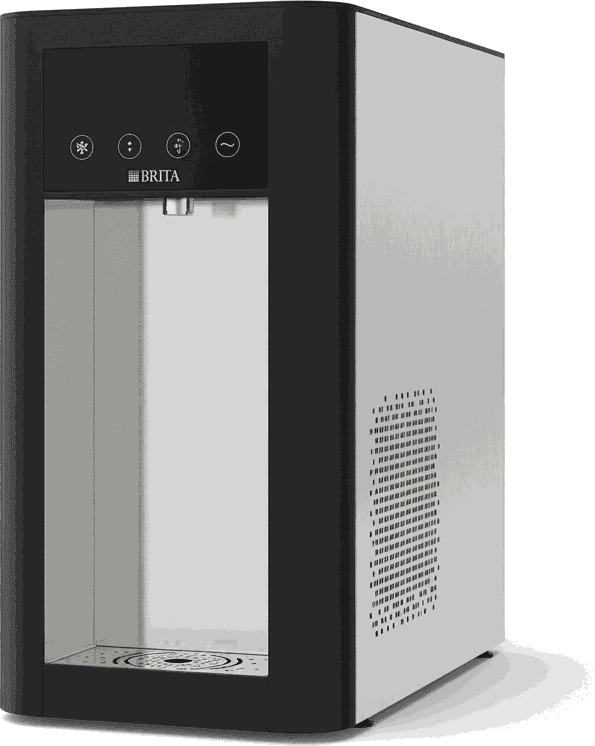
A single mains-fed dispense point for chilled still, sparkling, semi-sparkling and ambient water, engineered…
View product →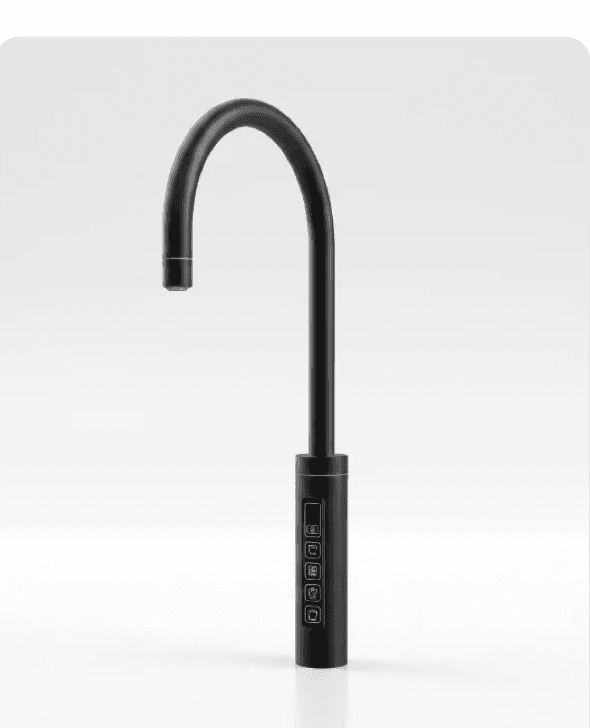
A high-performance, commercial-grade tap delivering instant boiling, chilled and sparkling water with reliability…
View product →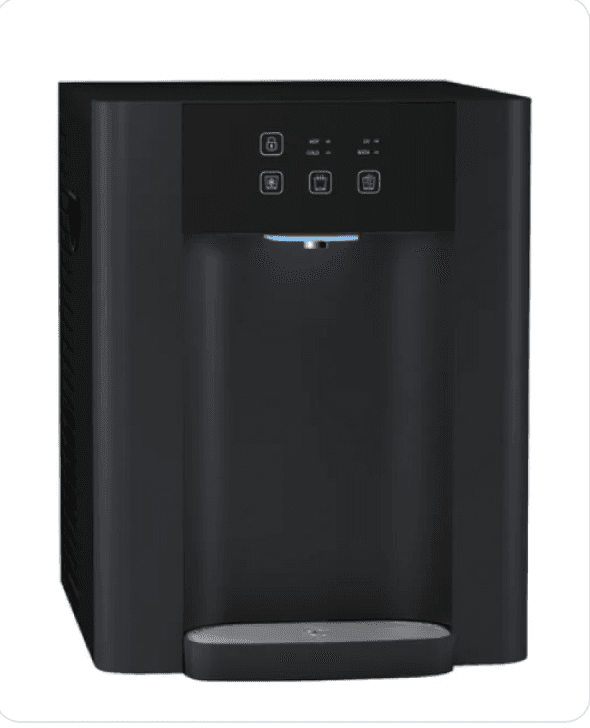
A sleek, compact countertop dispenser delivering instant chilled and ambient filtered water with commercial-grade…
View product →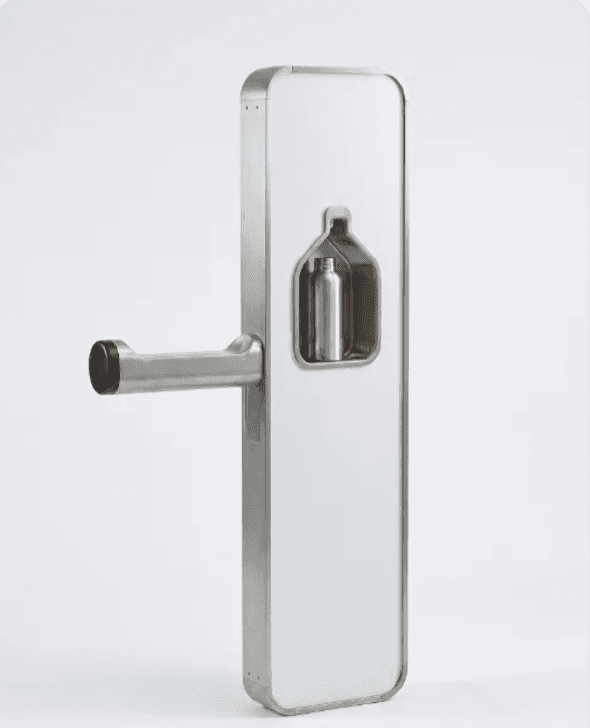
A premium freestanding station serving chilled and ambient filtered water with a recessed bottle-fill alcove, robust…
View product →