
Can you drink tap water in Dubai? For most offices, hotels and restaurants the honest answer has two parts. The water DEWA delivers to the boundary of your building is desalinated, treated and, DEWA says, meets World Health Organization standards. What comes out of the tap on the 30th floor, after a rooftop tank, a pump set and a long run of pipework, is the building's responsibility, and Dubai Municipality expects owners to prove it is still fit to drink.
Last updated: October 2026. This guide is for facilities managers, office managers and hospitality operators in Dubai who are deciding whether staff and guests should drink from the tap, and what has to be in place before they do.
TL;DR
- DEWA's supply is desalinated seawater. DEWA samples it daily and says it meets World Health Organization standards up to your building.
- Inside the building, quality depends on tanks, pumps, pipework and outlets, and that part is the owner's job.
- Dubai Municipality guidance asks for tanks to be cleaned and disinfected at least twice a year, inspected monthly, and sampled by an accredited lab at least every six months.
- A filtered, mains-fed dispenser is a sensible final step for drinking water, but it does not replace tank and pipework care.
Planning drinking water for a Dubai office or venue? Talk to Our Team about your building and how many people you serve.
In this article
- The short answer for Dubai buildings
- What DEWA is responsible for
- The last mile: where Dubai tap water changes
- What Dubai Municipality expects from building owners
- Tap, bottles or filtered dispenser: comparing the options
- Filtered water for Dubai workplaces and homes
- What to put in place before people drink from the tap
- Frequently asked questions
- Sources and technical notes
The short answer for Dubai buildings
Yes, the public supply in Dubai is produced to be drinkable. Whether you can drink tap water in Dubai at a particular outlet depends on what has happened to it since it left the DEWA network. Dubai Municipality's own guideline on unbottled drinking water puts it plainly: the building owner must apply its requirements "to ensure the quality and safety of water in the building until it reaches its users".
So the useful question for an office or venue is not "is DEWA water safe?" but "is our building looking after it?". If you can answer yes to the checks later in this guide, tap water is a reasonable starting point. If you cannot, fix the building first and treat any filter as a final safeguard, not a cure.
What DEWA is responsible for
The Dubai Electricity and Water Authority produces most of the emirate's drinking water by desalinating seawater at its Jebel Ali complex on the coast. The water is then remineralised, disinfected and pumped through DEWA's transmission network and reservoirs.
DEWA says its water laboratory takes daily samples from its reservoirs and network through fixed points across Dubai, and that the laboratory holds ISO/IEC 17025:2017 accreditation. DEWA also says its drinking water meets World Health Organization standards for production, transmission and distribution.
That responsibility ends at the connection to your property. Dubai Municipality's guideline names DEWA as the "water distributor" and treats everything downstream, including tanks, pumps, valves and pipes inside the building, as the building's water network.
The last mile: where Dubai tap water changes
Most Dubai towers and many low-rise buildings store water before it reaches the tap. A typical route is a ground-level tank, a transfer pump, a rooftop or intermediate tank, then gravity or booster pumps down to each floor. Every stage is a place where good water can lose quality.
Heat. Rooftop tanks and risers sit in some of the hottest conditions anywhere. Dubai Municipality asks buildings to keep cold water below 20°C at all outlets, which is hard to achieve in summer without insulated tanks and good turnover.
Stagnation. The guideline flags long branch pipes, dead ends and oversized tanks as risks, because still water loses its residual chlorine and allows biofilm to form. Offices that sit half-empty in summer, or floors left vacant between tenants, are exposed to this.
Neglected equipment. It also names poorly maintained point-of-use equipment, including ice machines and "old carbon filters that are past their use-by date", as places where microbes such as Legionella and Pseudomonas can grow. A forgotten filter can make water worse, not better.
Materials. Corroding pipework can release metals such as copper, lead and nickel, and the guideline lists these as chemical hazards inside buildings.
For more on how the UAE supply behaves once it is stored, see our guide to water quality in Abu Dhabi and Dubai, and for what TDS readings do and do not tell you, the UAE TDS and ppm explainer.
What Dubai Municipality expects from building owners
In September 2024 Dubai Municipality issued its Technical Guidelines for Quality of Unbottled Drinking Water (DM-HSD-GU17-DW2). It applies to drinking water in hotels, schools, commercial, government and residential buildings, fitness centres and more. The key duties for a building owner or operator include:
| Requirement | What the guideline says |
|---|---|
| Tank cleaning | Empty, clean and disinfect all water tanks with 50 mg/L chlorine at least twice a year |
| Tank inspection | Keep covers intact and fixed, and inspect tanks internally at least monthly |
| Who cleans | A tank cleaning company approved by Dubai Municipality |
| Water testing | Samples taken by an EIAC-accredited laboratory at least once every six months, and a week after each routine cleaning |
| Sampling points | Taps, tanks, water coolers and ice machines in the building |
| Flushing | Run taps in unoccupied rooms for several minutes at least once a week |
| Water safety plan | A written plan, system diagrams and a trained person responsible for water safety |
| Records | Cleaning reports, disinfection reports and lab results, kept for inspectors |
Food businesses have further duties under the Dubai Food Code, and Dubai Municipality's Legionella guidance covers hot and cold systems in more depth. If you run a restaurant or kitchen, our Legionella guide for UAE food outlets explains how those rules fit together.
Tap, bottles or filtered dispenser: comparing the options
Most Dubai workplaces and venues end up choosing between three routes for drinking water. Each can work. The right one depends on the building, the number of users and who will own the upkeep.
| Option | Suits | Main strength | What it depends on |
|---|---|---|---|
| Direct from the tap | Well-managed buildings with current tank and lab records | No extra equipment | Tank cleaning, testing and flushing being up to date |
| Bottled water coolers | Small sites, short leases, no plumbing access | Easy to start | Deliveries, storage space, bottle handling and cooler cleaning |
| Mains-fed filtered dispenser | Offices, hotels, cafés and kitchens with regular demand | Chilled, filtered water on tap without bottle logistics | A suitable filter, changes on schedule and regular cleaning |
A mains-fed dispenser with filtration addresses the things people notice most in stored water: taste, chlorine odour and fine sediment. It also gives you one controlled outlet to sample and maintain, rather than dozens of kitchen taps. It is not a substitute for a clean tank, and Dubai Municipality is clear that coolers and their filters need their own care.
What the guideline asks of coolers and filters
The same guideline sets rules for drinking water coolers and filters. Coolers should carry a recognised certificate of conformity, be cleaned to the manufacturer's schedule with approved materials, and have their filters changed on time with a label showing the date. Filters should come from an approved supplier, and the change interval should take account of how much water is used. In practice, that means the dispenser you choose should come with a clear service plan.
Filtered water for Dubai workplaces and homes
We supply, install and maintain drinking water systems across Dubai and the wider UAE. We match the equipment to the building: BRITA for workplaces and venues, and our own RoyalFlow taps for homes.
For offices, hotels and venues: BRITA
BRITA's mains-fed dispensers are built for shared, everyday use. The BRITA Top Pro serves chilled still, sparkling, semi-sparkling and ambient water from one point, in versions sized for roughly 10 to 60 or 20 to 100 users. It has ThermalGate, which heat-disinfects the outlet on a set cycle. For busy kitchens and breakout areas we also fit BRITA taps and commercial water filtration on the incoming supply.
For villas and apartments: RoyalFlow
At home, the same building questions apply, but the answer is usually a single tap. RoyalFlow for the home pours boiling, chilled, sparkling and ambient filtered water from one kitchen tap. A compact unit under the sink does the work, with carbon filtration and UV built in, and it serves households of up to eight people. The boiling water has a child safety lock.
Not sure which route fits your building or home? Request a Quote and tell us how many people you serve and where the water would be drawn.
What to put in place before people drink from the tap
Use this as a working checklist for an office, hotel or venue in Dubai:
- Ask for the paperwork. Get the last two tank cleaning certificates and the most recent accredited lab report from your landlord or facilities provider.
- Check the contractor. Confirm the tank cleaning company is approved by Dubai Municipality.
- Look at the tanks. Covers should be sealed and fixed, and someone should be inspecting them monthly.
- Flush quiet outlets. Run taps on empty floors or in unused rooms weekly, and before people move back in.
- Pick your drinking points. Decide which outlets are for drinking and label the rest if needed.
- Plan the maintenance. If you add a dispenser or filter, agree who changes the filter, how often, and where the record is kept. A planned maintenance contract keeps this off the office manager's desk.
- Know what to do if a result fails. The guideline expects the owner to notify the authorities, clean and disinfect, and retest.
Frequently asked questions
Is Dubai tap water safe to drink?
DEWA supplies desalinated water that it says meets World Health Organization standards. Whether a specific tap is fit to drink depends on the building's tanks, pipework and maintenance, which Dubai Municipality makes the owner's responsibility.
Why does Dubai tap water sometimes taste of chlorine or seem cloudy?
Chlorine is added to protect the water in the network, and some can remain at the tap. Cloudiness or sediment often points to tank or pipework condition, so it is worth asking when the tanks were last cleaned.
How often should building water tanks be cleaned in Dubai?
Dubai Municipality's guideline asks for tanks to be emptied, cleaned and disinfected at least twice a year by an approved company, with internal inspections at least monthly.
Do office water dispensers in Dubai need maintenance?
Yes. Dubai Municipality expects coolers to be cleaned to the manufacturer's schedule and filters changed on time, with a label showing the change. The interval should reflect how much water the dispenser serves.
Sources and technical notes
- Dubai Municipality, Technical Guidelines for Quality of Unbottled Drinking Water, DM-HSD-GU17-DW2, V1, 25 September 2024
- Dubai Municipality, Technical Guidelines for Legionella Control in Water Systems, DM-HSD-GU44-LCWS2
- Dubai Municipality, Food Code
- DEWA, water laboratory receives ISO/IEC 17025:2017 certification, August 2021
- DEWA, commitment to reliable energy and water, March 2024
This article is general guidance. Check the current version of each guideline and confirm the requirements that apply to your building and activity with Dubai Municipality.
Talk to Sovereign Water about drinking water in your building
Tell us about your building, the number of people you serve and how drinking water is handled today. We can talk through BRITA dispensers, RoyalFlow taps, filtration, installation and a maintenance plan that fits the Dubai Municipality requirements above.
Products mentioned in this article

A single mains-fed dispense point for chilled still, sparkling, semi-sparkling and ambient water, engineered…
View product →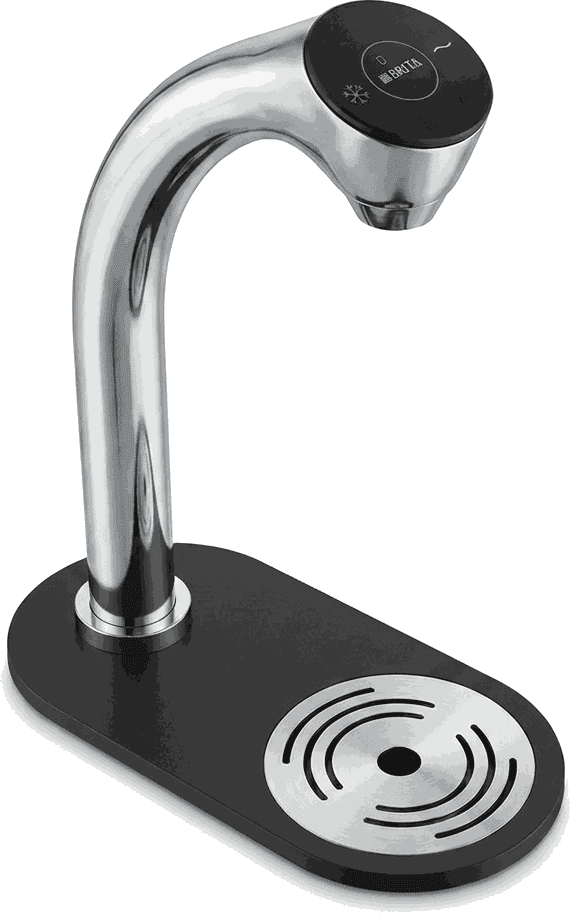
BRITA's signature undercounter dispenser delivers up to five water types from a single brushed stainless steel tap…
View product →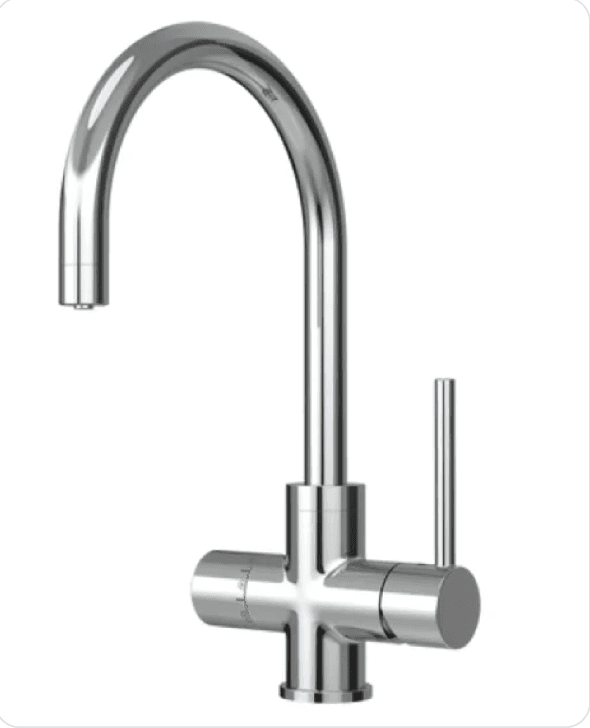
A high-performance undersink smart tap for the home: instant boiling, chilled and sparkling filtered water…
View product →