
Water filtration for restaurant in UAE projects should start with the water that reaches each appliance, not with a generic filter package. A restaurant may receive utility water through a building tank, booster set and long internal pipe runs before separate branches feed espresso machines, ice makers, combi ovens, dishwashers and drinking outlets. Those applications do not all need the same outlet water.
This guide gives owners, consultants and facilities teams a practical way to map that route, test the relevant points and turn the results into an equipment-specific filtration brief.
TL;DR
- Trace water from the building inlet and storage tank to each protected appliance before choosing treatment.
- Test for the equipment decision: hardness and alkalinity for hot equipment, chlorine and taste for beverages, sediment for prefiltration, and targeted microbiology where the water-safety plan requires it.
- Do not use a handheld TDS result as a complete restaurant water analysis.
- Separate operational treatment from hygiene controls. A cartridge cannot correct poor tank management or an unsuitable plumbing route.
- Put inlet results, appliance requirements, peak flow and commissioning targets into the fit-out specification.
In this article
- Trace the restaurant water route before testing
- Choose tests by appliance, not by package
- Separate operational chemistry from hygiene questions
- Build a representative sampling plan
- Turn each result into a treatment decision
- Write water into the fit-out and tender brief
- Commission the system under kitchen demand
- Frequently asked questions
Trace the restaurant water route before testing
Begin with a simple schematic. Mark the utility or building entry, ground or roof tank, booster set, pressure zone, existing treatment and every branch feeding equipment that matters to service.
The relevant sample point is not always the nearest sink. A coffee bar can sit on one branch while the ice machine and warewashing area sit on another. A mall unit may receive water through landlord-managed storage and boosting. A hotel restaurant may share central treatment with guest areas but use additional point-of-use cartridges in the kitchen.
Dubai Electricity and Water Authority states that its Central Laboratory analyses water from production, transmission and distribution stages and that the laboratory is accredited to ISO/IEC 17025:2017 by the Emirates International Accreditation Centre.[1] That utility-level testing is important, but a restaurant specification still needs to account for what happens after water enters the property.
Record:
- which organisation controls the tank and booster system;
- the normal tank and pressure route serving the kitchen;
- existing filters, softeners, dosing or membranes;
- pipe size and distance to each appliance;
- low-use branches and recent shutdowns;
- the proposed position of each new treatment stage.
The map prevents a common mistake: taking one sample, treating it as representative of the whole kitchen and then discovering that the protected machine uses a different branch.
Choose tests by appliance, not by package
A restaurant does not need every available laboratory parameter. It needs enough evidence to protect equipment, support the required beverage or food outcome and meet the site's water-safety responsibilities.
| Appliance or outlet | Useful starting evidence | The decision it supports |
|---|---|---|
| Espresso and batch-brew coffee | Hardness, alkalinity, pH, conductivity or TDS, chlorine | Scale control, flavour consistency and compatibility with manufacturer requirements |
| Ice machine | Hardness, turbidity or sediment, chlorine, targeted hygiene evidence where required | Scale, clarity, taste and the site's cleaning and water-safety plan |
| Combi oven and steam equipment | Hardness, alkalinity, conductivity or TDS, temperature and demand | Scale control and whether softening or membrane treatment should be assessed |
| Dishwasher or glasswasher | Hardness, alkalinity, chloride where relevant, peak flow | Scale, spotting, detergent performance and hydraulic sizing |
| Drinking-water outlet | Taste concern, chlorine, turbidity, TDS trend and targeted analysis | Whether carbon, particulate filtration or a broader treatment route is justified |
A handheld meter can help compare branches and identify a change, but it normally estimates TDS from conductivity. It cannot identify calcium, magnesium, chloride or a particular contaminant. Laboratory results and appliance water specifications should lead the final decision.
Check the appliance manual rather than applying one house number to the whole kitchen. Coffee, steam, ice and warewashing equipment can have different inlet ranges and different sensitivities.
Separate operational chemistry from hygiene questions
Restaurant teams often use “water quality” to describe several different problems. Separate them before selecting treatment.
Operational chemistry covers scale, corrosion tendency, taste, odour, sediment and dissolved load. These affect equipment life, drink consistency, appearance and service intervals.
Hygiene questions cover storage, turnover, cleaning, temperature, stagnation and any microbiological issue identified by the site's water-safety or food-safety process. They require the correct sampling method and competent interpretation.
A carbon filter can reduce a defined taste or chlorine issue, but it is not a substitute for tank inspection, planned cleaning or good turnover. A softener changes hardness but does not remove every dissolved solid. Reverse osmosis reduces a broad dissolved load but still needs suitable pretreatment, storage and maintenance.
For analysis used in a formal decision, check that the laboratory's accredited scope includes the parameter and method required. EIAC is the UAE accreditation body recognised for assessing testing and calibration laboratories among other conformity-assessment services.[2] Accreditation should be checked at scope level, not assumed from a logo.
Do not ask a filter supplier to diagnose an unexplained hygiene concern from a TDS photograph. Escalate that question through the site's responsible water-safety and food-safety route.
Build a representative sampling plan
A practical UAE restaurant plan normally starts with the proposed equipment inlets during normal service conditions.
Use these points where they answer a clear question:
- Building entry or landlord baseline: what enters the site before internal storage.
- Tank or booster outlet: what leaves the building's normal stored and pumped route.
- Coffee-bar inlet: the actual feed to espresso and brew equipment.
- Hot-equipment manifold: the feed to combi ovens or steam equipment.
- Ice-machine inlet: the branch used during normal ice production.
- Before and after existing treatment: whether the current stage is changing the intended parameter.
Do not mix points in one bottle. Label each bottle with a unique sample code and keep the location log separately if the laboratory supplies unlabelled sterile containers.
Sample under representative occupancy. A reading taken before opening may not reflect pressure, flow or tank turnover during lunch or evening service. Record whether nearby equipment was drawing water, whether the tank was in normal use and whether any plumbing or cartridge change occurred recently.
Follow the laboratory's bottle, flushing, preservation and delivery instructions. Chemical and microbiological samples may need different containers and handling. Field readings should record the instrument, calibration and temperature-compensation status.
Turn each result into a treatment decision
The treatment route should follow the evidence and the appliance requirement.
When chlorine, taste or odour is the issue
Confirm the inlet condition and target outlet before assessing activated carbon. The Regent Carbon 3072 is one commercial carbon route to compare against kitchen flow, contact time and media-change criteria.
regent-carbon-3072
When suspended solids are confirmed
Identify whether the particles are present at the building entry, appear after storage or come from internal pipework. The Regent Sediment 3072 is a depth-filtration example to assess against loading, pressure loss and cleaning or backwash duty.
regent-sediment-3072
When hardness is driving scale
Use total hardness, demand, peak flow and operating temperature. A compact softener such as the Regal 250 can be considered for a suitable small-commercial duty, but it must be sized for regeneration, continuity and the protected load.
regal-250-water-softener
When the dissolved profile must be reduced
Reverse osmosis should answer a defined outlet requirement. The Majestic RO is a commercial membrane route to assess where the analysis supports dissolved-solids reduction and the site can accommodate pretreatment, storage, drainage and maintenance.
majestic-ro
Some kitchens need a treatment train rather than one device. Sediment control can protect carbon or membrane stages. Softening may protect selected hot equipment while drinking outlets follow a different route. Avoid treating every branch when only one appliance has a specific requirement.
Write water into the fit-out and tender brief
Water treatment is often left until equipment is already ordered and cupboards, drainage and electrical services are fixed. That makes a correct system harder to install and maintain.
The brief should state:
- the water-route drawing and sample-point references;
- laboratory results and field readings;
- each appliance's verified inlet-water requirements;
- target outlet values for named parameters;
- typical daily use and simultaneous peak flow;
- static and minimum dynamic pressure;
- pipe sizes and isolation points;
- available footprint, access, power and drainage;
- permitted interruption during service;
- monitoring, consumable and maintenance responsibilities;
- commissioning method and acceptance criteria.
Ask tenderers to show which stage protects which appliance. A statement such as “commercial filtration included” is too vague. The specification should identify whether the duty is sediment control, chlorine reduction, softening, broader dissolved-solids reduction or a combination.
Plan bypasses and isolation carefully. A bypass can keep a kitchen operating during service, but it can also send untreated water to equipment if it is left open. Label the route and assign responsibility for checks after maintenance.
Commission the system under kitchen demand
Commissioning should prove both chemistry and hydraulics. Test while the kitchen is drawing water at a representative rate, not only from an idle outlet.
Record:
- inlet and outlet readings for the specified parameters;
- flow and pressure at the protected equipment;
- initial pressure loss across treatment stages;
- control settings, blending position and meter calibration;
- cartridge, media or membrane identifiers;
- sample-point labels and service date;
- who owns routine checks and corrective action.
Retest when the water route changes, a tank is cleaned, a new appliance is installed, service life changes unexpectedly or scale, taste, sediment or pressure problems recur. Use the same points and methods where possible so the comparison remains useful.
Common mistakes include testing the wrong sink, selecting from TDS alone, overlooking peak flow, using one treatment target for every appliance and failing to define how success will be measured.
Frequently asked questions
1. What should a UAE restaurant test before choosing filtration?
Start with hardness, pH, alkalinity, conductivity or TDS, chlorine and turbidity, then add targeted parameters required by the appliances or site risk assessment.
2. Can the DEWA water-quality result replace a kitchen sample?
It is a useful supply baseline. A site sample shows what reaches the appliance after building storage, boosting and internal distribution.
3. Is one sample enough for the whole restaurant?
Only if the mapped route proves the relevant appliances share the same feed and treatment. Separate branches may need separate evidence.
4. Does a high TDS reading mean the restaurant needs RO?
No. Identify the dissolved profile and required outlet quality before selecting a membrane system.
5. Is a softener the same as a filter?
No. A softener targets hardness through ion exchange. Carbon, sediment and membrane systems address different water conditions.
6. Should coffee and dishwashing equipment use the same treated water?
Not automatically. Compare each manufacturer's inlet requirements, flow and duty before combining treatment routes.
7. Why test during normal service?
Kitchen demand can change pressure, flow and the route through tanks or boosters. Representative conditions improve the design brief.
8. What should be checked at handover?
Confirm the named outlet targets, flow, pressure, settings, service access, monitoring duties and baseline readings.
Talk to Sovereign Water about a UAE restaurant water brief
Send the kitchen water-route drawing, appliance schedule, representative results, peak demand and required outlet quality. Sovereign Water can use that information to discuss an appropriate foodservice treatment route.
Sources
[1] https://www.dewa.gov.ae/en/about-us/media-publications/latest-news/2023/08/dewas-central-lab: DEWA, Central Laboratory conducts thousands of water quality tests, 18 August 2023
[2] https://eiac.gov.ae/about-us/: Emirates International Accreditation Centre, About EIAC
Products mentioned in this article
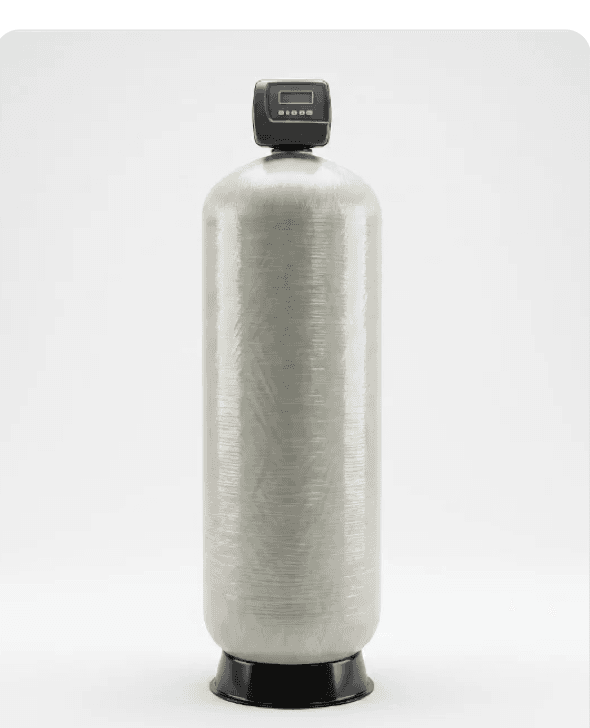
A single 30 x 72 inch activated carbon filter on a metered CE 1.5 inch control valve, holding a 180 kg Centaur bed…
View product →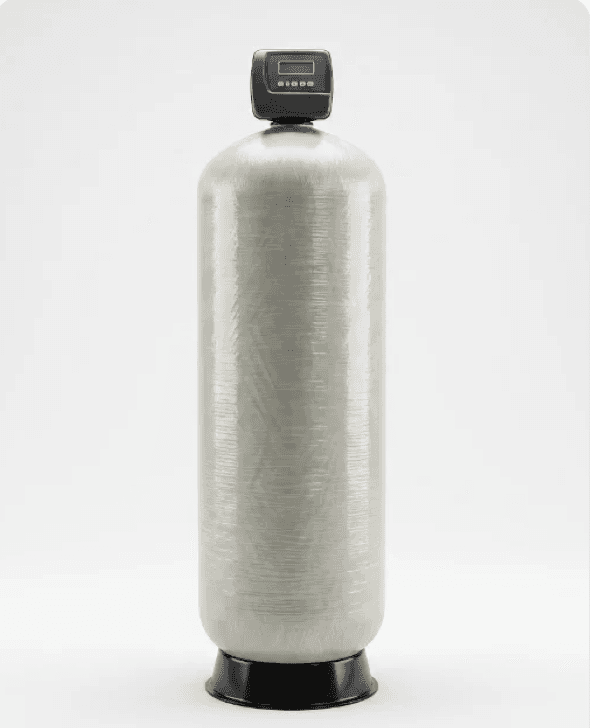
A single 30 x 72 inch auto-backwash depth filter on a metered CE 1.5 inch control valve, carrying 367.9 litres…
View product →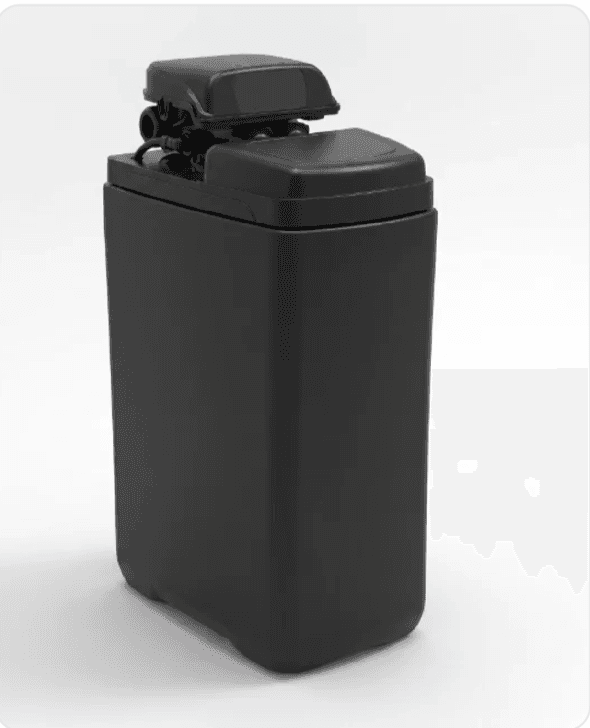
Compact, efficient softening for larger homes and small commercial sites: up to 3 m3 per hour with up-flow…
View product →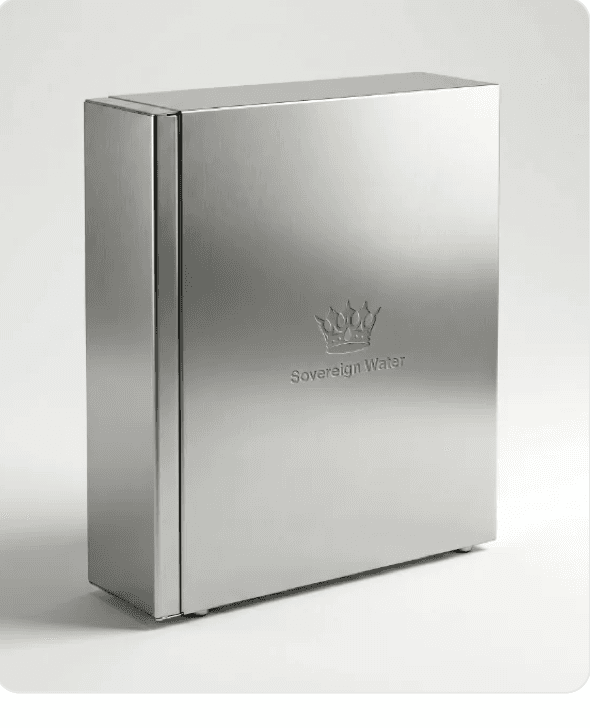
High-flow commercial reverse osmosis for high-volume food & beverage: up to 185 litres of crystal-clear purified…
View product →