
Water filtration for a restaurant in the UAE is not a nice-to-have afterthought; it is what stands between your kitchen equipment and the damage that untreated desalinated supply can do. This guide is written for restaurant owners, kitchen managers and food service operators across Dubai, Abu Dhabi and the Northern Emirates: what your water actually contains, how it affects your equipment, dishes and beverages, what filtration should and should not do, and how to choose the right system for your operation.
If you would rather have a specialist assess your specific site than read a general guide, you can get in touch at any time.
TL;DR
- UAE restaurant supply is desalinated and buffered through building storage tanks, so the water reaching your kitchen differs from the plant output.
- That water carries minerals, residual chlorine and possible tank sediment that damage equipment and affect food and beverage quality.
- A dishwasher, combination oven, espresso machine and ice machine each need the water conditioned to the right standard.
- Filtration is not a single "one box fixes all" decision; it depends on hardness, TDS, chlorine and the equipment involved.
- Choosing a supplier is about correct specification, total cost of ownership and ongoing maintenance.
- Sovereign Water supplies, installs and maintains fit-for-purpose filtration for restaurants across the UAE.
How Desalinated Water Reaches Your Restaurant
UAE restaurant supply is largely desalinated seawater, distributed by utilities such as the Dubai Electricity and Water Authority (DEWA) and the equivalent authorities in Abu Dhabi and the Northern Emirates. Desalination produces potable water, but the water that reaches your kitchen is not the same as the water leaving the plant. It travels through the distribution network and through your building's storage tanks, and in the UAE's heat those tanks allow temperature fluctuation and can accumulate sediment.
Older distribution pipes may also corrode internally, introducing iron and copper into the water stream. The practical result is water that is safe to drink but operationally variable: its mineral content, chlorine residual and temperature can all shift through the day and across seasons. A restaurant running coffee machines, ice machines, steam ovens, dishwashers and beverage dispensers is exactly where that variability turns into real problems.
How Water Quality Affects Restaurant Equipment and Food
Poor water quality affects a restaurant in ways that are both visible and hidden, and they compound across the kitchen.
Dishwashers and glasswashers. Hard water leaves spotting and film on glassware and crockery, and scale builds on heating elements and spray nozzles. A glasswasher with scaled nozzles cannot clean effectively and uses more water and energy to compensate. Water glassware is the first thing a guest judges.
Combination ovens and steamers. Scale coats the heating elements and the interior of steam-generating equipment, reducing heat transfer and forcing the unit to work harder. The result is longer cooking times, inconsistent results and premature failure.
Espresso and coffee machines. This is where water quality is most obvious. Hardness scales the internal waterways and flattens flavour, and chlorine affects taste. A restaurant's coffee and espresso quality is directly tied to the water it runs through the machine.
Ice machines. Scale on the evaporator plate reduces ice output and forces the machine to run longer, increasing energy use. Ice quality is not just about the cube: it affects every drink it is served in.
Is Your Restaurant's Water Safe?
In general, yes. Public supplies are treated to potable standards, although building storage tanks still need to be kept clean and well managed. The main problem for a restaurant is suitability rather than safety. Water that is perfectly fine to drink can still be wrong for a steam oven, an espresso machine or a glasswasher. Separating "potable" from "fit for purpose" is exactly why professional filtration earns its keep in food service.
What Water Filtration for a Restaurant Should Do
The right filtration depends on your equipment and your incoming water, so the starting point is always a site survey rather than a standard box. Depending on what it finds, a restaurant system may include several stages.
Sediment and carbon filtration removes particulate and chlorine taste and odour, protecting equipment and improving beverage flavour. This is the foundation for most restaurant systems.
Scale-inhibiting filtration conditions the water at the point of use for espresso machines and dispensers, keeping the mineral character beverages need while preventing scale.
Softening protects hot water plant and whole-building equipment by exchanging calcium and magnesium for sodium.
Reverse osmosis (RO) removes the vast majority of dissolved solids and suits applications with tight water specifications, such as combination ovens, steamers and speciality coffee, usually with controlled remineralisation or blending.
Because UAE restaurant water varies by emirate, building and season, specification matters. A site survey is the reliable way to size the right combination, and it is a step every credible supplier should insist on.
Choosing a Water Treatment Partner for Your Restaurant
The supplier you choose matters as much as the equipment. There are four things worth testing any provider on.
They specify for your site. A specification built around your supply and usage is the difference between a system sized to your site and a generic one. If a supplier quotes without understanding your site, treat that as a warning sign.
They understand food service. A supplier who works across restaurant and hospitality kitchens can speak to the specific needs of dishwashers, steam ovens, espresso and ice machines, not just sell a filter.
They quote total cost of ownership, not just the box. Consumables, maintenance, downtime and energy all factor into what a system really costs in a busy restaurant.
They take responsibility after installation. Servicing, cartridge changes, performance monitoring and fast response when something fails are where value is delivered, especially during peak service.
Compliance and Maintenance in UAE Restaurants
Food service establishments in the UAE operate under municipal food safety oversight, and the water used in food and drink preparation is part of that picture. A documented treatment programme, with testing records and maintenance logs, is a genuine compliance asset that demonstrates a facility is managing water quality rather than assuming it.
Maintenance is where water quality is actually managed over time. Filter cartridges need changing on a schedule that matches real water usage and quality. The right interval depends on each cartridge's rated capacity, how much water you use and the quality of your incoming supply. A proactive maintenance programme, scheduled around your operation and ideally with monitoring, keeps a busy kitchen from ever running on degraded water.
Frequently Asked Questions
Is a simple filter enough for my restaurant?
Not always. A basic sediment filter removes particles but does nothing about hardness, which is the most common damaging issue. Your water test will tell you whether you need scale control, softening or reverse osmosis on top of carbon filtration. Over-engineering is wasteful, but under-specifying fails to protect your equipment.
How do I know the water quality in my restaurant?
You cannot reliably know without testing. Water that looks clear and tastes fine can still carry minerals, residual chlorine or corrosive compounds that damage equipment progressively. Professional testing measures hardness, TDS, chlorine and other parameters relevant to your equipment.
Will filtration change the taste of my food or coffee?
Properly specified filtration produces clean, neutral water. Removing excess minerals can improve beverages and some dishes by eliminating off-flavours from high-mineral water. Coffee and espresso are often noticeably cleaner in flavour.
How often do filter cartridges need changing in the UAE?
It depends on each cartridge's rated capacity, how much water you use and the quality of your incoming supply. Your supplier should test your water and set a schedule for your specific operation rather than applying a fixed interval.
Can I manage the system myself?
You can manage simple systems with trained staff, but most restaurant operators find a managed plan more reliable. Consumable management, testing and system optimisation take time your kitchen may not have. A partner who handles these keeps the system effective and frees your team to run the kitchen.
Equip Your Restaurant With the Right Water Treatment
Sovereign Water supplies, installs and maintains fit-for-purpose water filtration for restaurants across Dubai, Abu Dhabi and the Northern Emirates. We specify the right treatment for your supply and your operation and maintain the system over its lifetime, protecting your dishwashers, steam ovens, espresso machines and ice machines so a busy kitchen never runs on water that damages it.
Products mentioned in this article
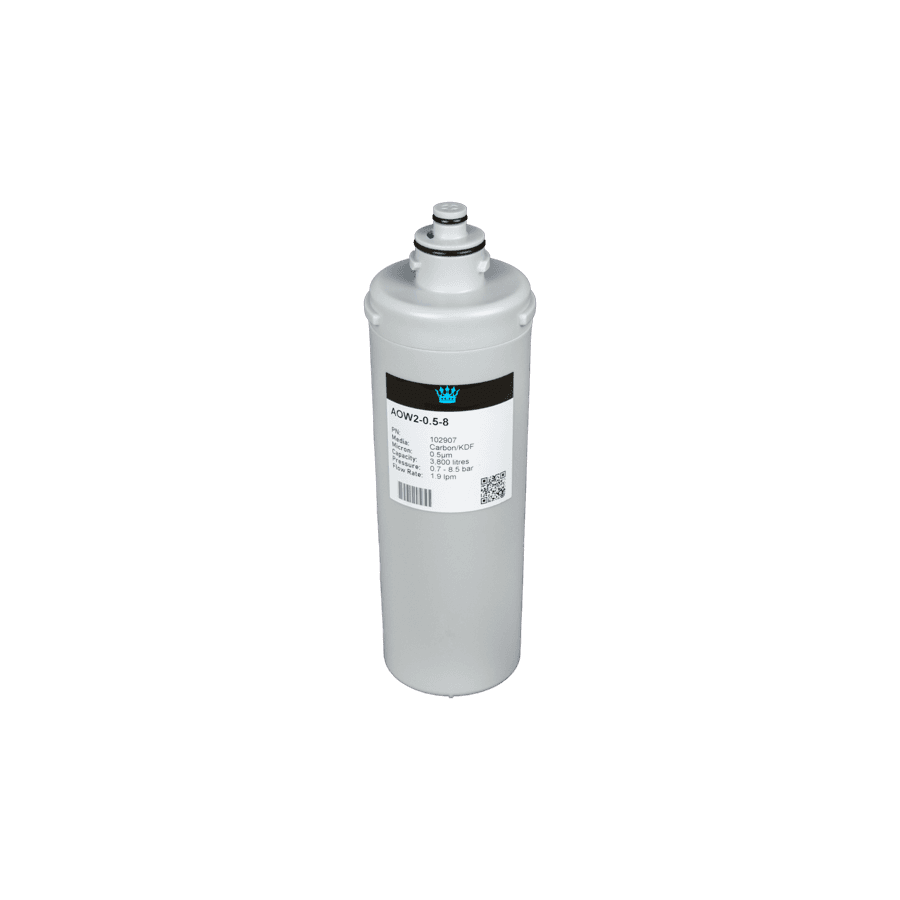
Premium foodservice filtration cartridges, engineered as a retrofit alternative for popular filter-head systems…
View product →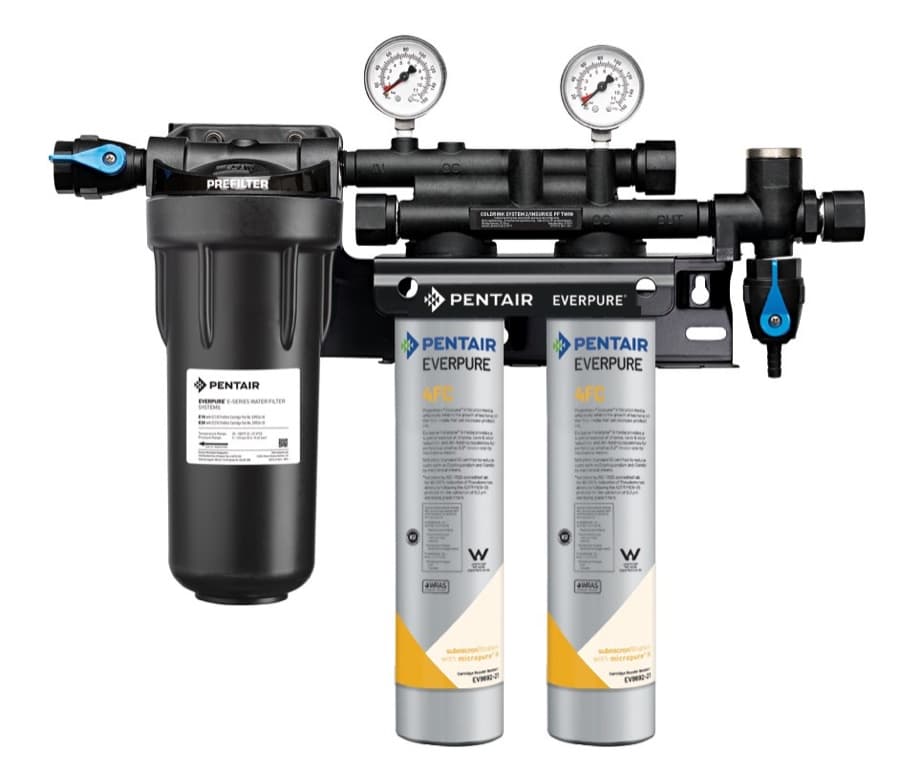
Everpure's high-performance FC systems deliver consistent quality water for coffee and ice: Fibredyne bacteriostatic…
View product →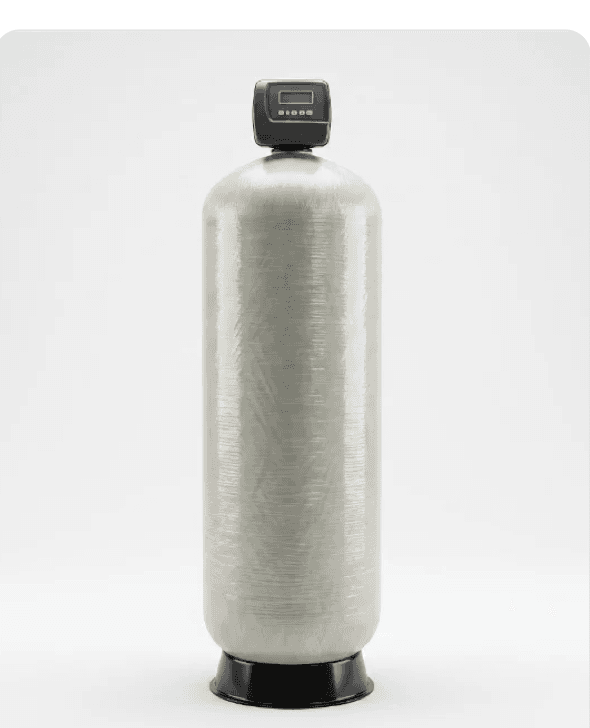
A single 30 x 72 inch activated carbon filter on a metered CE 1.5 inch control valve, holding a 180 kg Centaur bed…
View product →